

Key Points
- Progesterone is the “Cinderella hormone”—quietly essential for mood, sleep, metabolism, and balance, yet often overshadowed by estrogen.
- Levels commonly decline in the mid-30s to 40s, contributing to symptoms during perimenopause and menopause.
- Supporting a healthier progesterone-to-estrogen ratio can help with hot flashes, sleep, bloating, mood, and bone health.
- Bioidentical progesterone cream such as ProgestaKey is one practical option many women explore with their practitioner.
If you’ve ever felt like your hormones were running the show—and not in a good way—you’re not alone. Hot flashes, restless nights, unexplained weight gain around the middle, mood swings, or that foggy feeling that makes it hard to focus can all point to one often-overlooked player: progesterone.
I call it the Cinderella hormone. It does an extraordinary amount of work for women’s health, especially during perimenopause and menopause, yet it rarely gets the attention estrogen receives. After more than five decades of working with women on hormone balance, detoxification, and nutrition, I’ve seen how restoring progesterone’s role can make a real difference in how women feel day to day. That’s why I’ve written about this underappreciated hormone for years in my bestsellers, Before the Change and Hot Times: How to Eat Well, Live Healthy, and Feel Sexy During The Change.
What Does Progesterone Do?
Progesterone is produced mainly after ovulation and acts as estrogen’s natural counterbalance. When levels are adequate, many women notice steadier moods, better sleep, less bloating, and more stable energy. It also supports bone formation, helps regulate the stress response, and influences metabolism and body temperature.
During the reproductive years, progesterone rises and falls with the menstrual cycle. As women move into perimenopause—often beginning in the mid-to-late 30s or 40s—ovulation becomes less consistent, and progesterone production typically declines earlier and more sharply than estrogen. This shift is one reason so many women experience estrogen-dominant symptoms even before full menopause.
Signs of Low Progesterone
Women frequently report a cluster of symptoms when progesterone is low relative to estrogen. These can include hot flashes and night sweats, sleep difficulties, anxiety or irritability, brain fog, bloating, changes in libido, breast tenderness, and concerns about bone density over time.
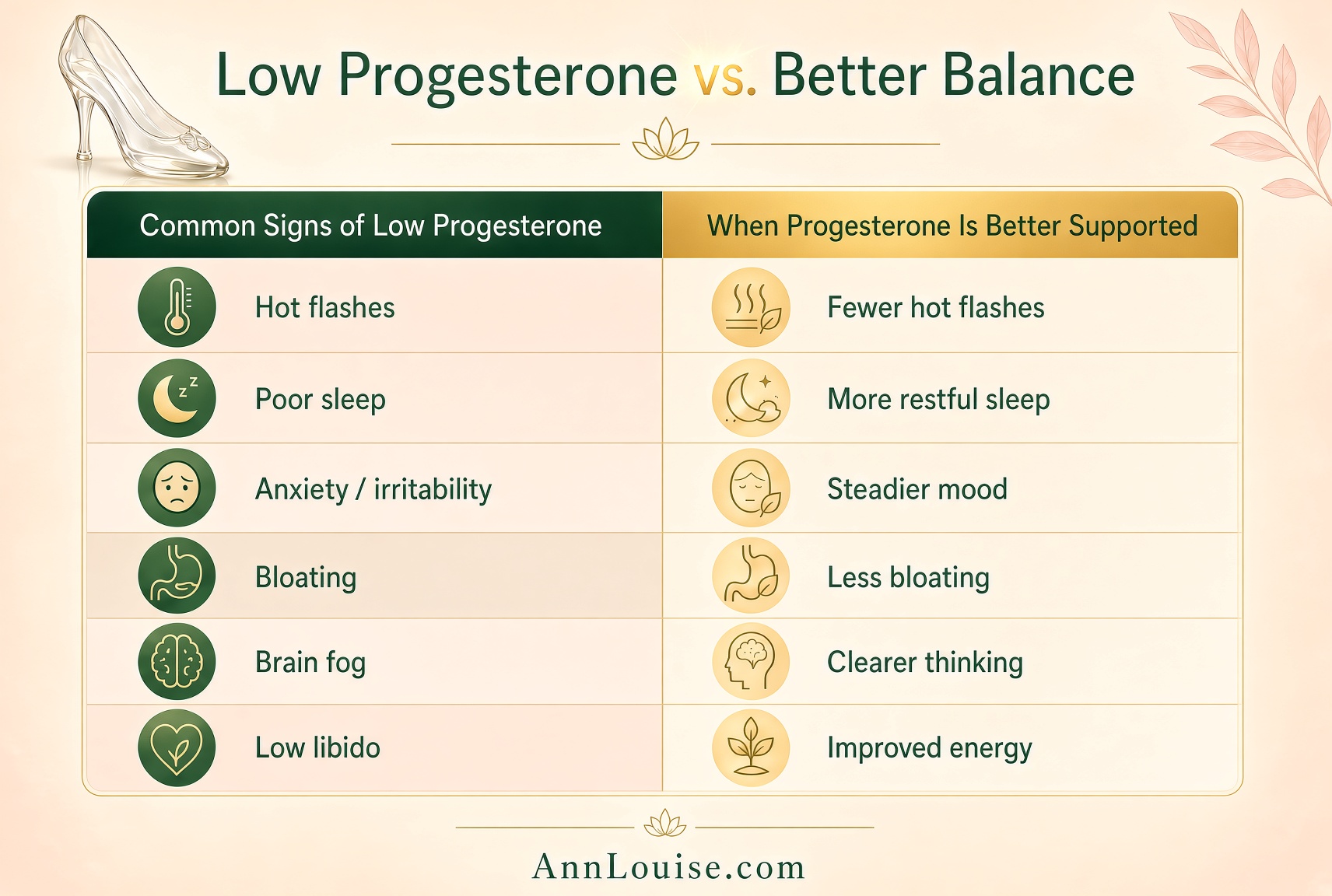
Not every woman experiences all of these, and symptoms can have multiple causes. Still, low progesterone is one of the most common patterns I see. Harvard Health has noted that progesterone levels often begin to decline well before menopause, which aligns with what many women notice in their late 30s and 40s.
The latest studies show that progesterone can meaningfully help with some of the most bothersome perimenopausal symptoms. A 2023 randomized, placebo-controlled trial published in Scientific Reports found that women taking oral micronized progesterone reported significantly fewer night sweats and better sleep quality compared with placebo, along with less interference in daily life. Read the study
Why Balancing Progesterone and Estrogen Matters
When progesterone drops while estrogen remains relatively higher, the resulting imbalance can amplify inflammatory signals, affect mood and sleep, and influence where the body stores fat. Supporting a healthier ratio doesn’t erase every age-related change, but it can help many women feel more like themselves again.
Progesterone’s role in bone health is particularly worth noting. While estrogen receives most of the attention for bone protection, progesterone also supports bone-building cells. Research and meta-analyses indicate that progesterone promotes osteoblast activity, and combining it with estrogen has been linked to greater improvements in spinal bone mineral density than estrogen alone. Maintaining adequate levels is one piece of a broader approach to skeletal health that also includes nutrition, strength training, and regular screening.
On the metabolic side, progesterone helps the body use fat for fuel and can act as a mild diuretic, which may reduce the fluid retention some women experience. It is also concentrated in the brain, where it interacts with receptors involved in calm and sleep—another reason low levels can affect mood and rest.
How Progesterone Changes During Perimenopause and Menopause
In the years leading up to menopause, cycles often become irregular as ovulation becomes less frequent. Because progesterone is primarily produced after ovulation, levels fall. After menopause, the ovaries produce very little progesterone, and the body relies on smaller amounts from the adrenal glands and other tissues.
This is why symptoms that feel manageable in the early 40s can intensify later. Supporting the body with lifestyle foundations—adequate protein, healthy fats, stress management, and quality sleep—matters at every stage. For many women, topical natural progesterone becomes a useful additional tool once levels have declined.
Supporting Balance with ProgestaKey
After studying hormones for more than five decades and working with thousands of women, I helped develop ProgestaKey, a natural progesterone crème made from wild yam. Each pump delivers 20 mg of USP progesterone—the same molecular structure the body produces—and is lightly scented with lavender essential oil.
Many women use it as part of a broader plan during perimenopause and menopause. Application is typically rotated across areas such as the inner arms, abdomen, chest, or neck. Timing and frequency can differ depending on whether a woman is still cycling, in perimenopause, or postmenopausal, so following the product guidance and checking with a practitioner is important.
Women often start by discussing their symptoms and, when appropriate, considering testing such as a salivary hormone panel. Many notice improvements in sleep, mood steadiness, and reduced bloating within a few weeks, though individual responses vary. ProgestaKey is not a replacement for medical care; it is one practical option women explore when they want bioidentical support. You can learn more about the product and suggested use by life stage at UNI KEY Health.
For a deeper look at the bigger picture of perimenopause and the practical steps that help, my books Before the Change and Hot Times walk through the hormonal shifts many women experience and the strategies I’ve refined over decades of clinical work.
FAQ
What does progesterone do in the body?
It balances estrogen, supports sleep and mood, contributes to bone health, influences metabolism, and helps regulate the stress response.
What are common signs of low progesterone?
Hot flashes, night sweats, sleep problems, anxiety or irritability, bloating, brain fog, and changes in cycle regularity are frequently reported.
How does progesterone change during perimenopause and menopause?
Levels typically decline first and more sharply than estrogen as ovulation becomes less consistent. After menopause, ovarian production drops significantly.
How can I test for low progesterone?
Salivary hormone testing is a common non-invasive way to look at bioavailable levels. Blood tests are also used. A qualified practitioner can help interpret results in the context of your symptoms and stage of life.
How long does it take to notice results with progesterone cream?
Many women report changes in sleep, mood, or bloating within a few weeks, though responses vary. Consistency and proper use matter.
Can I use progesterone cream if I’m still having periods?
Yes, many women in perimenopause do. Timing is usually cycled with the menstrual cycle. Check product guidance and discuss with your practitioner.
Is natural progesterone safe long-term?
Many women use bioidentical progesterone cream for extended periods under practitioner guidance. Individual health history, other medications, and regular check-ins are important.
Your Next Step
If these symptoms sound familiar, consider talking with a qualified practitioner about testing and whether natural progesterone support fits your situation. Many women start with lifestyle foundations and then explore options such as ProgestaKey as part of a personalized plan. You can find ProgestaKey and related resources at UNI KEY Health.
Learn More:
Take Control of Hormone Havoc. In this blog, I’m sharing with you my most successful methods to make menopause less miserable.
Before The Change: Taking Charge of Your Perimenopause. My NY Times bestselling guide designed to help you cruise through perimenopause, the first complete DIY program for managing perimenopause, with natural remedies.
This article is for educational purposes only and is not intended to diagnose, treat, cure, or prevent any disease. Always consult with a qualified healthcare practitioner before making changes to your health regimen or starting any hormone support.