
You have a built-in drainage system that’s just as important as your bloodstream, yet most people have never even heard of it.
It’s called your lymphatic system.
When it’s working well, you probably never think about it. But when lymph slows down, you may notice puffiness, bloating, sluggishness, swollen ankles, or simply feel like your body isn’t functioning at its best.
The good news? Lymphatic drainage at home is surprisingly simple. In fact, some of my favorite techniques take only a few minutes a day.
Why Your Lymphatic System Matters
Think of your lymphatic system as your body’s drainage network, or to put it even simpler, your body’s built-in garbage collector.
In Fat Flush Fitness, I describe the lymphatic system this way: A complex network of needle-thin tubes carries lymph fluid, filled with fat globules, toxins, and excess liquid, to your lymph nodes, where these wastes are filtered and neutralized.
Its job is to collect excess fluid, cellular waste, toxins, bacteria, viruses, and other unwanted materials from your tissues and help transport them to your body’s natural elimination pathways. It also plays a key role in immune health by transporting infection-fighting white blood cells throughout the body. It’s vital for detoxing.
Unlike your heart, your lymphatic system has no pump of its own. Instead, it depends on muscle movement, deep breathing, hydration, and even gravity to keep lymph flowing.
Signs Your Lymph May Need Support
A sluggish lymphatic system doesn’t usually announce itself with one dramatic symptom. Instead, it often shows up in small ways that are easy to dismiss.
You might notice:
- Puffiness around your eyes or face when you wake up.
- Swollen ankles or fingers by the end of the day.
- Bloating that doesn’t seem to have a clear cause.
- A heavy, sluggish feeling that lingers even after a good night’s sleep.
- Frequent colds or feeling like your immune system needs extra support.
- Cellulite or skin that has lost some of its firmness.
Of course, these symptoms can have many different causes. But if several sound familiar, it may be worth paying a little more attention to your lymphatic system.
The good news is that supporting healthy lymph flow doesn’t have to be complicated. In fact, some of the most effective techniques are simple habits you can do right at home.
5 Simple Ways to Improve Lymphatic Drainage at Home
You don’t need expensive equipment or regular spa treatments to support your lymphatic system. These five simple habits can help improve lymphatic drainage at home and have been part of my wellness programs for decades.
#1 Dry Brushing: My Favorite At-Home Lymphatic Drainage Technique
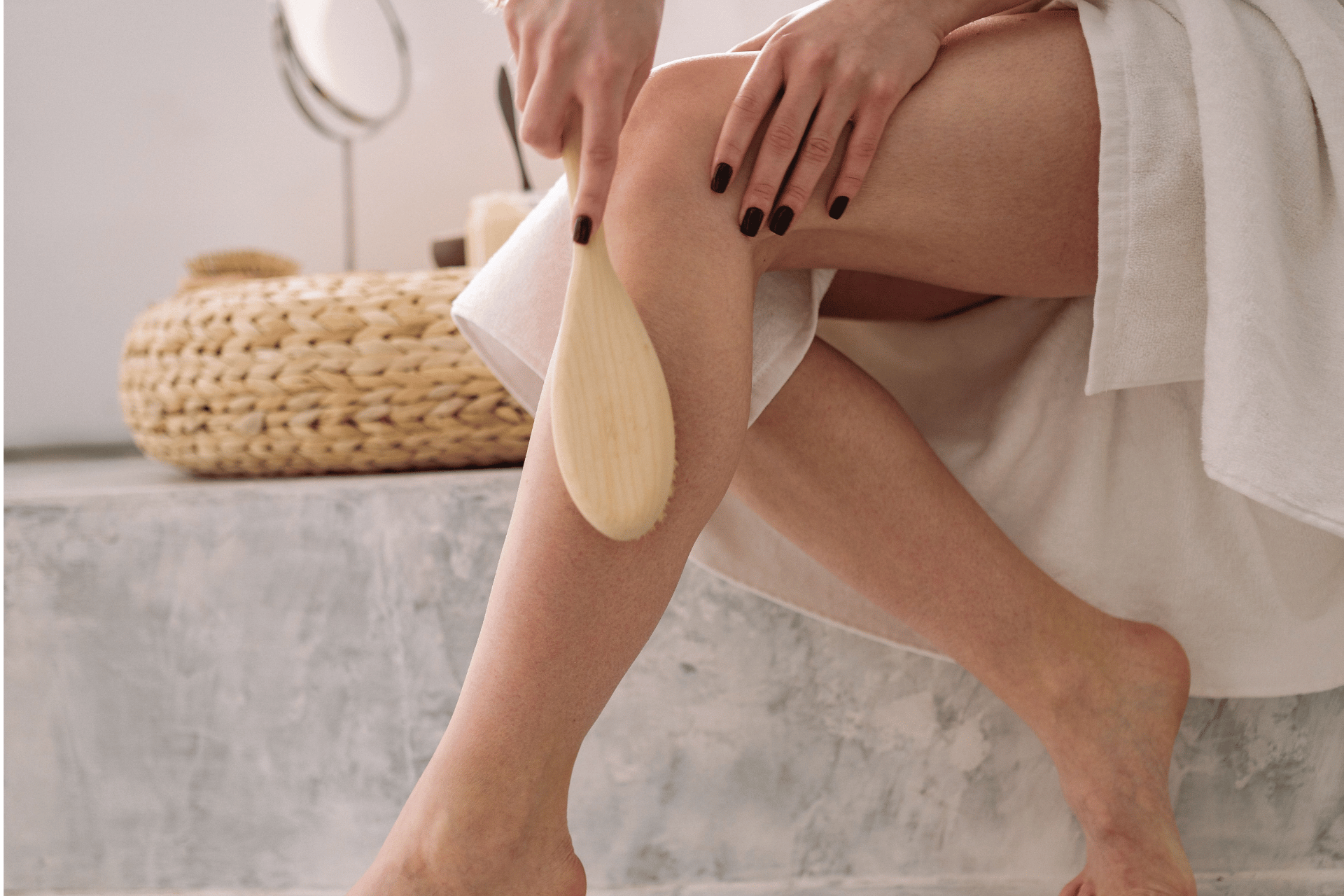
Dry brushing works because your lymphatic vessels lie just beneath the surface of the skin. Using a natural-bristle brush with light, gentle strokes may help stimulate lymphatic flow, increase circulation, and encourage your body’s natural detoxification process.
I recommend using a medium-firm brush made with natural bristles. A long-handled brush is especially helpful for reaching your back. Avoid synthetic bristles, which can be too harsh, and never brush skin that’s irritated, bruised, or broken.
If you’re just getting started, don’t overdo it. A few minutes, two or three times a week, is plenty. As your skin becomes accustomed to brushing, you can gradually increase the frequency if desired.
#2 Move Your Body: Your Muscles Are Your Lymphatic Pump
One of the most fascinating things about the lymphatic system is that it has no pump of its own.
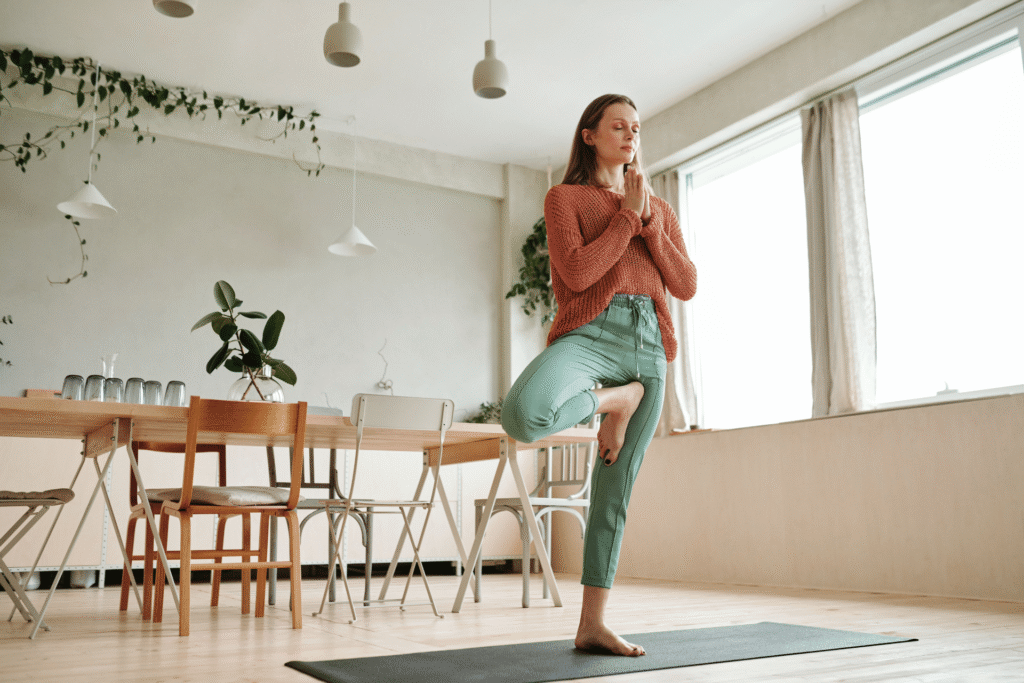
Instead, it relies on your muscles to keep lymph moving throughout the body. Every time you walk, stretch, climb the stairs, or even take a deep breath, you’re helping move lymph where it needs to go.
One of my favorite forms of movement is rebounding. The gentle up-and-down motion on a mini trampoline helps stimulate lymphatic flow while being easy on the joints. If rebounding isn’t for you, a brisk walk, gentle stretching, or even dancing around your kitchen all count.
The important thing is to keep moving. Your lymphatic system depends on it.
#3 Take a Deep Breath
Here’s something most people don’t realize: every deep breath you take helps move lymph through your body.
Because your lymphatic system has no pump of its own, it relies on the natural movement of your diaphragm to help circulate lymph. With each slow, deep breath, your diaphragm gently compresses and releases the lymphatic vessels in your chest, encouraging lymph to move where it needs to go.
That’s one reason shallow breathing, chronic stress, and sitting for long periods may contribute to sluggish lymph flow over time.
One of the simplest habits you can develop is to pause several times a day and take five or six slow, deep belly breaths. Inhale through your nose, allowing your abdomen to expand. Then exhale slowly through your mouth.
It only takes a minute, but those deep breaths can help support healthy lymphatic flow while also calming your nervous system and helping you manage stress. That’s a win-win in my book.
Tip: I often combine deep breathing with stretching or a short walk to give my lymphatic system an extra boost.
#4 Hydrate Your Lymphatic System
Water is one of the simplest ways to support healthy lymph flow, yet it’s often overlooked.
Remember, lymph is made up primarily of water. When you’re dehydrated, lymph can become more sluggish, making it harder for your body to efficiently move waste products and excess fluid.
That’s one reason I encourage women to sip water throughout the day instead of waiting until they’re thirsty.
One of my favorite ways to stay hydrated is with my famous Cran-Water recipe. Not only does it make drinking water more enjoyable, but it’s been a cornerstone of my Fat Flush programs for years. Many readers tell me it’s one of the easiest healthy habits they’ve ever adopted.
If you haven’t tried it yet, I encourage you to do so.
#5 Try a Gentle Lymphatic Massage at Home
You don’t need to schedule an expensive spa treatment to support your lymphatic system. A gentle self-massage done at home can be surprisingly effective.
One of the biggest mistakes people make is pressing too hard. Unlike deep-tissue massage, lymphatic massage uses very light pressure because the lymphatic vessels lie just beneath the surface of the skin. Think gentle, not forceful.
I recommend beginning with your face and neck since nearly one-third of your lymph nodes are located below the jaw. From there, gently massage your arms, torso, and legs using slow, light strokes that always move toward your heart, which is the direction lymph naturally flows.
You don’t need to rush. Set aside about 20 to 30 minutes once a week, find a warm, quiet place where you can relax, and use a little massage oil or lotion if you’d like. The goal isn’t to work your muscles. It’s simply to encourage healthy lymph flow.
If you don’t have half an hour, don’t worry. Even five minutes of gentle self-massage, especially when combined with dry brushing, deep breathing, and regular movement, can become part of a healthy daily routine.
In Fat Flush Fitness, I provide a complete step-by-step full-body lymphatic massage, along with a quick five-minute “Lymph Pump Massage” that’s perfect for busy days. Both have been favorites of Fat Flush followers for years.
None of these techniques takes much time. But together, they can become a powerful daily routine for supporting healthy lymph flow and your body’s natural detoxification processes.
My Favorite Lymphatic Drainage Resources
FAQ
How do I know if my lymphatic system is clogged?
Although the lymphatic system doesn’t literally become “clogged,” sluggish lymph flow may contribute to symptoms such as puffiness, swollen ankles, bloating, feelings of heaviness, or sluggishness. Supporting healthy lymph flow with regular movement, hydration, deep breathing, and other healthy habits can help keep your lymphatic system functioning at its best.
How long does it take to improve lymphatic drainage?
Everyone is different, but many people notice they feel lighter, less puffy, and more energized after just a few days of consistently practicing healthy lymph-supporting habits. The key is making these techniques part of your regular wellness routine rather than relying on occasional treatments.
Can rebounding really help lymphatic drainage?
Yes. Rebounding is one of my favorite exercises because the gentle up-and-down motion encourages lymph movement while being easy on the joints. Even a few minutes a day on a mini trampoline can complement walking, stretching, and other forms of exercise that support healthy lymph flow.
Can sitting too much slow lymphatic flow?
Yes. Unlike your circulatory system, the lymphatic system depends on muscle movement to keep fluid moving. Long periods of sitting may contribute to sluggish lymph flow, which is why I recommend standing up, stretching, or taking a short walk every hour whenever possible.