

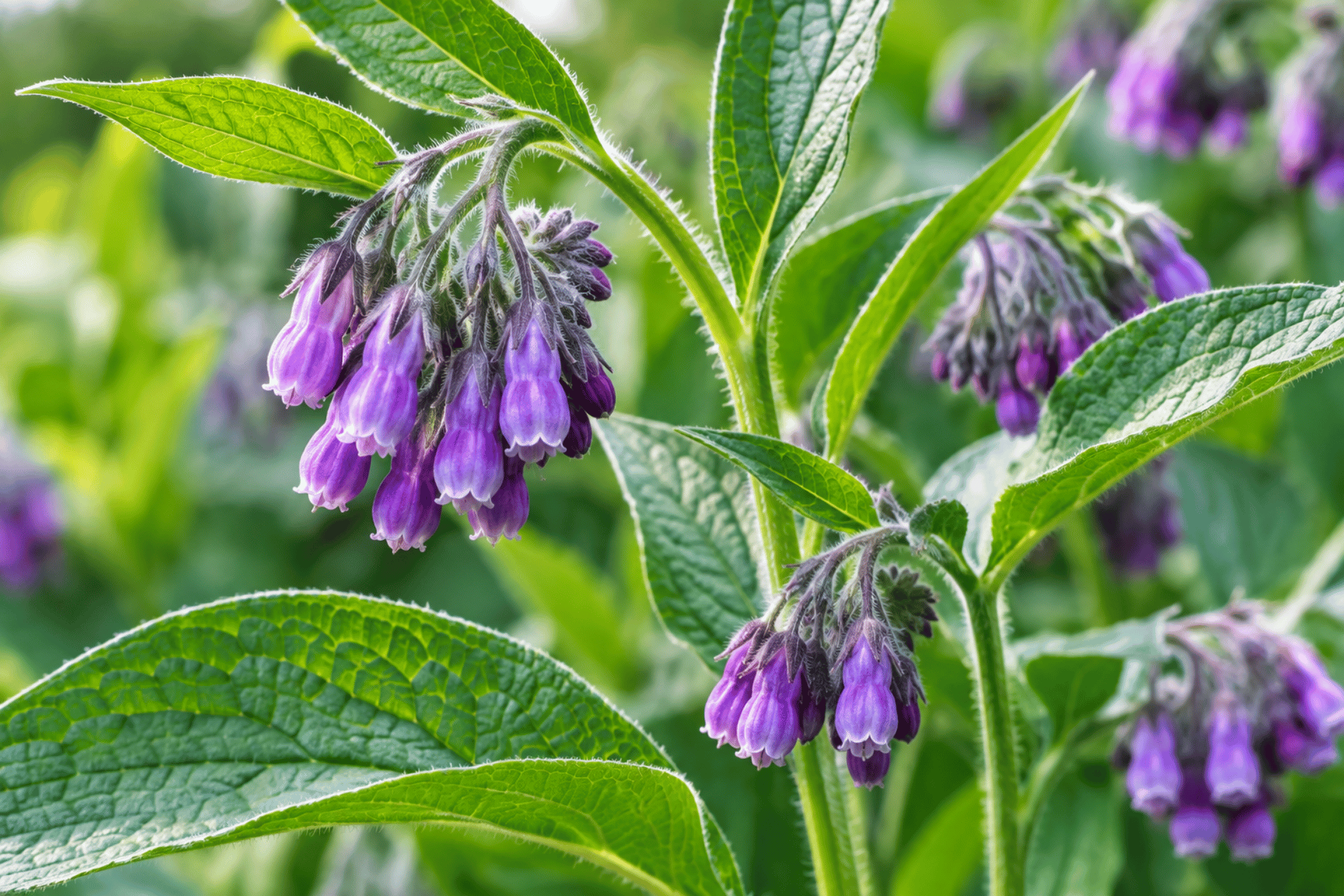
If your aching knees or back have you reaching for ibuprofen again, there’s an old-fashioned herb you may want to know about.
It’s called comfrey, and while people have rubbed it onto aching joints and injuries for centuries, modern researchers have now put this ancient remedy to the test.
The results? In one clinical trial, people with acute back pain experienced a dramatic reduction in pain in just five days.
And that’s not the only study that caught my attention.
What Is Comfrey?
Comfrey (Symphytum officinale) has such a long history of use for injuries, bruises, sprains, and aching joints that it earned the old-fashioned nickname “knitbone.”
But I’m much more interested in what researchers are discovering today.
Comfrey contains a number of naturally occurring plant compounds, including allantoin and rosmarinic acid, that have attracted attention for their potential effects on inflammation, tissue repair, and pain.
And unlike so many natural remedies that are supported mainly by tradition, topical comfrey has actually been put through randomized, placebo-controlled clinical trials.
What Happened to Back Pain in Just 5 Days?
This is the study that really got my attention.
Researchers enrolled 120 men and women suffering from acute upper or lower back pain. In this randomized, double-blind trial, participants applied either a comfrey root extract ointment or a placebo three times a day for five days.
By the end of the study, pain during movement had decreased by an average of approximately 95 percent in the comfrey group, compared with about 38 percent in the placebo group.
That’s quite a difference.
And remember, we’re not talking about months of treatment. The study lasted just five days.
You can read the clinical trial here: Comfrey Root Extract for Acute Back Pain – PubMed
And Then There Are Those Aching Knees
Comfrey has also been studied in people with painful osteoarthritis of the knee.
In another double-blind, randomized, placebo-controlled trial, researchers followed 220 people with knee osteoarthritis for three weeks.
Pain scores dropped 54.7 percent among those using the comfrey root ointment, compared with just 10.7 percent in the placebo group. Participants using comfrey also experienced improvements in mobility and quality of life.
For an herb that’s been around for centuries, I’d say modern science is giving us some very good reasons to take another look.
One Very Important Caution
Here’s where I want you to pay attention.
I’m talking about using comfrey topically. I do not recommend taking comfrey internally.
Comfrey naturally contains substances called pyrrolizidine alkaloids, or PAs. These compounds can harm the liver when consumed, which is why I wouldn’t casually brew comfrey into tea or swallow it as a supplement. The FDA also identifies comfrey as a source of pyrrolizidine alkaloids.
When choosing a comfrey cream or ointment, look for a reputable product specifically formulated for topical use and follow the label directions. I also wouldn’t apply it to broken skin.
If you’re not sure which product to choose, you can find professional-quality brands through my Fullscript dispensary.
The Bottom Line
I’m always fascinated when something our ancestors used hundreds of years ago finally makes its way into a modern clinical trial.
Comfrey is a perfect example.
When a centuries-old herb produces results like these in controlled human studies, I pay attention. Especially when researchers have seen significant improvements in both back pain and painful knees.
Sometimes the most interesting natural remedies aren’t new discoveries at all. They’re old ones finally getting a closer look.
And if you’ve got an aching back or cranky knees, topical comfrey may be one worth remembering.
Resources include:
Giannetti et al., British Journal of Sports Medicine: Comfrey Root Extract for Acute Back Pain
Grube et al., Phytomedicine: Comfrey Root Extract for Knee Osteoarthritis
Smith & Jacobson: Comfrey Cream for Osteoarthritis of the Knee









One Response
Comfrey acts on the P2X3 pain receptor and this contributes to it’s analgesic effect. Ravintsara oil also acts on the P2X3 receptor and this receptor is prevalent in the feet especially the plantar fascia. I found massaging Ravintsara oil into the sole of my foot instantly relieved the pain of my plantar faciitis. If you have plantar faciitis get your blood checked as it is a precursor to diabetes as high blood sugar degrades the collagen in the plantar fascia decreasing it’s elasticity and causing micro tears resulting in the pain.