

Lately, I can’t go a day without hearing about peptides.
A client brings them up. A practitioner mentions them in passing. Or I’ll see another headline promising faster healing, easier weight loss, or younger-looking skin—this time, thanks to something called a peptide.
And I understand the appeal.
On the surface, it sounds like exactly what we’ve been waiting for. Something targeted. Precise. Almost like flipping the right switch in the body.
But over the years, I’ve learned to pause when something starts gaining that kind of momentum.
Because the real question isn’t just does it work?
It’s how it works—and whether it’s working with your body… or trying to override it.
So What Are Peptides?
Peptides aren’t foreign to your body. Not at all.
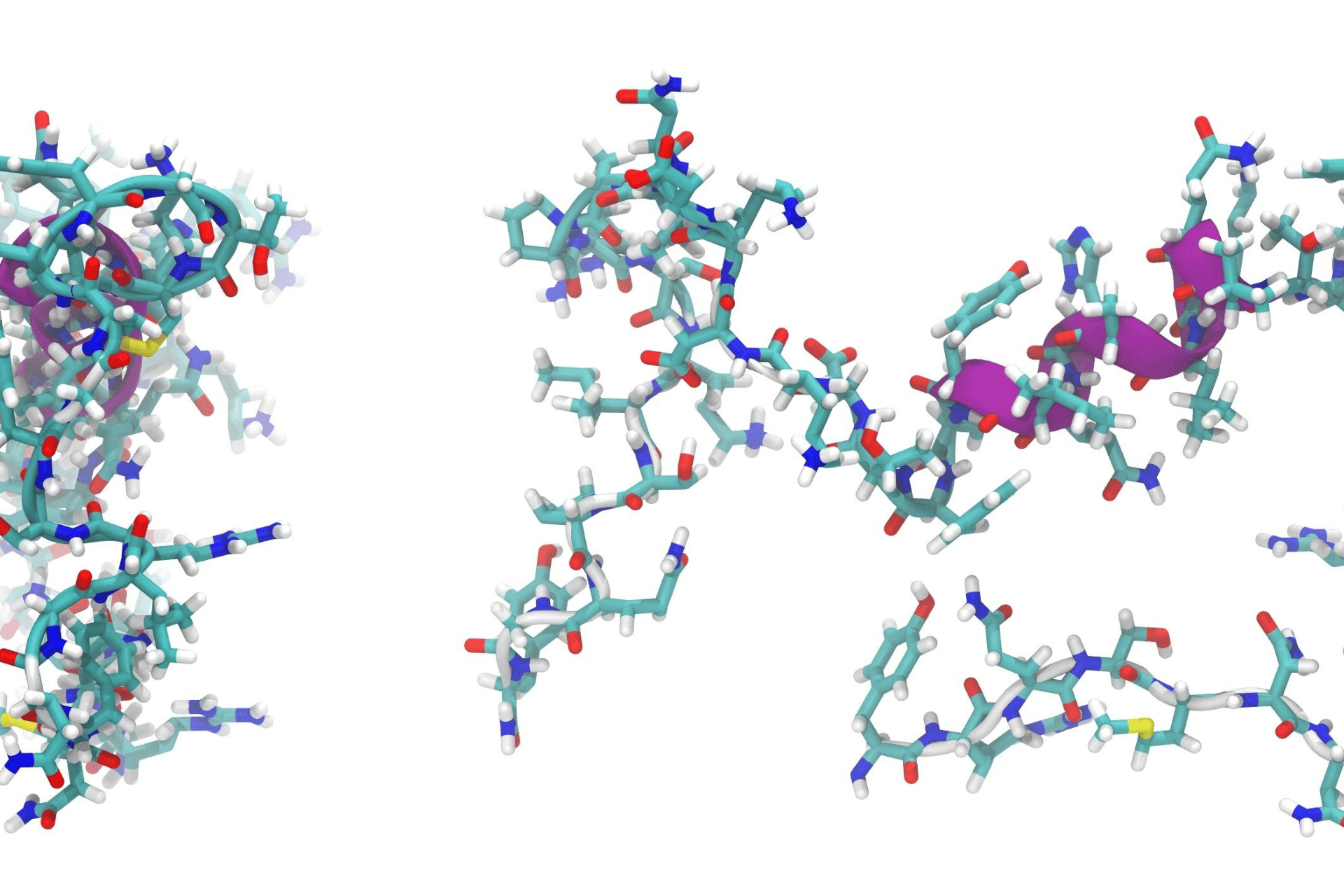
They’re simply short chains of amino acids—tiny messengers your body already uses to regulate things like hormones, metabolism, tissue repair, and immune function.
Your body makes them every day.
What’s new is that many of these peptides are now being recreated in labs and introduced from the outside—most often by subcutaneous injection—to try to push a specific response.
And sometimes, that works.
But the body is never just one pathway at a time.
Why Everyone Is Talking About Them
You may have heard a few of these names already.
- BPC-157 – often used for healing and recovery
- CJC-1295 / Ipamorelin – used to stimulate growth hormone
and of course,
- GLP-1 drugs like semaglutide – now widely used for weight loss
Each one is designed to target a very specific function.
Repair this. Burn more fat. Reduce appetite.
And yes—people are seeing results.
But results don’t always tell the whole story.
What’s Not Being Talked About Enough
Here’s what we need to understand.
Peptides don’t just “support” the body—they send instructions.
Instructions related to growth. Repair. Regeneration.
And those are powerful signals.
But they’re not always appropriate in every situation.
Especially when we’re talking about individuals with a history of cancer—or even those navigating today’s increasingly complex health landscape.
Because some of the same pathways peptides are designed to stimulate—cell growth, tissue repair, even new blood vessel formation—are also pathways involved in tumor growth.
That doesn’t mean peptides cause cancer.
But it does mean they may stimulate processes you don’t necessarily want activated in the wrong context.
And in my experience, that’s not a small detail.
A Better Question to Ask
Instead of asking,
“Which peptide should I take?”
I often suggest asking something simpler:
“What does my body need to do this naturally?”
Because more often than not, the pathway isn’t broken.
It’s under-supported.
Peptides vs. Supporting Your Body—What’s the Difference?
Most peptides are designed to push a specific function in the body—like healing, fat loss, or muscle growth.
But there’s another way to approach it:
>> Give your body what it needs so it can do these things on its own.
Let’s break it down.
For Healing (Peptide BPC-157)
BPC-157 is often used to speed up healing and repair.
But healing doesn’t happen without the right building blocks.
>> UNI KEY Collagen 4+ – helps rebuild skin, joints, and gut lining
>> UNI KEY GLA-90 – helps reduce inflammation
>> UNI KEY Vitality C – supports collagen production and tissue repair
Simple truth: Your body can’t heal well if it doesn’t have the materials to rebuild.
For Weight Loss & Appetite (GLP-1 Drugs)
GLP-1 drugs work by shutting down appetite.
That can help—but here’s something even safer:
>> UNI KEY GLP-1 Formula helps:
- balance blood sugar
- reduce cravings
- support natural hunger signals
Simple truth: It’s better to rebalance appetite than to override it.
For Energy & Recovery (Growth Hormone Peptides)
Peptides like CJC-1295 are used to boost recovery and energy.
But most people don’t need stronger signals.
They need better support.
>> UNI KEY Mineral-Key – supports hydration and cellular function
>> UNI KEY Advanced Daily Multivitamin – fills in key nutrient gaps
Simple truth: Your body needs nutrients to make energy—not just stronger signals.
The Bigger Picture
Peptides are designed to push the system.
But if your body is depleted, stressed, or missing key nutrients…
That push doesn’t always land the way you expect.
A Final Thought
There may be a place for peptide therapy.
But before going there, I always suggest doing something simpler first.
Support your body.
Rebuild what’s missing.
Give it what it needs to function the way it was designed to.
Because in my experience, the body isn’t broken.
It’s often just under-supported.
And when you correct that… everything else tends to fall into place.
Resources include:
Fosgerau and T. Hoffmann, “Peptide Therapeutics: Current Status and Future Directions,” Drug Discovery Today 20, no. 1 (2015): 122–128, https://doi.org/10.1016/j.drudis.2014.10.003
J. Craik, D. P. Fairlie, S. Liras, and D. Price, “The Future of Peptide-Based Drugs,” Chemical Biology & Drug Design 81, no. 1 (2013): 136–147, https://doi.org/10.1111/cbdd.12055
Thundimadathil, “Cancer Treatment Using Peptides: Current Therapies and Future Prospects,” Journal of Amino Acids 2012 (2012): 967347, https://doi.org/10.1155/2012/967347







5 Responses
Thank you so much for sharing this. I appreciate your honesty and teaching us yo help the body long term. You are a blessing.
Fabulous article cannot wait to share
You mentioned 6 different pills, that would have to be taken once a day, that we would have to take to get what you say we need, that alone sounds like a royal pain in the ass, and I’m guessing that would be around 300 bucks worth and for us seniors, that sounds insane. You need to come up with One pill that has Everything you’re talking about in it at a price seniors can afford, them you’ve got something !
Peter, we hear you—and you’re right, no one wants to take a handful of supplements or overspend. The good news is, you don’t have to take everything. Most people do well starting with just one or two based on their main need. As for one pill that does it all—we wish it worked that way, but the body needs different nutrients for different systems. Start with what matters most to you and go from there – Team ALG
Thank you!! This is so informative! We can only find such information from you, Ann Louise.
I remain grateful.
Elaine