

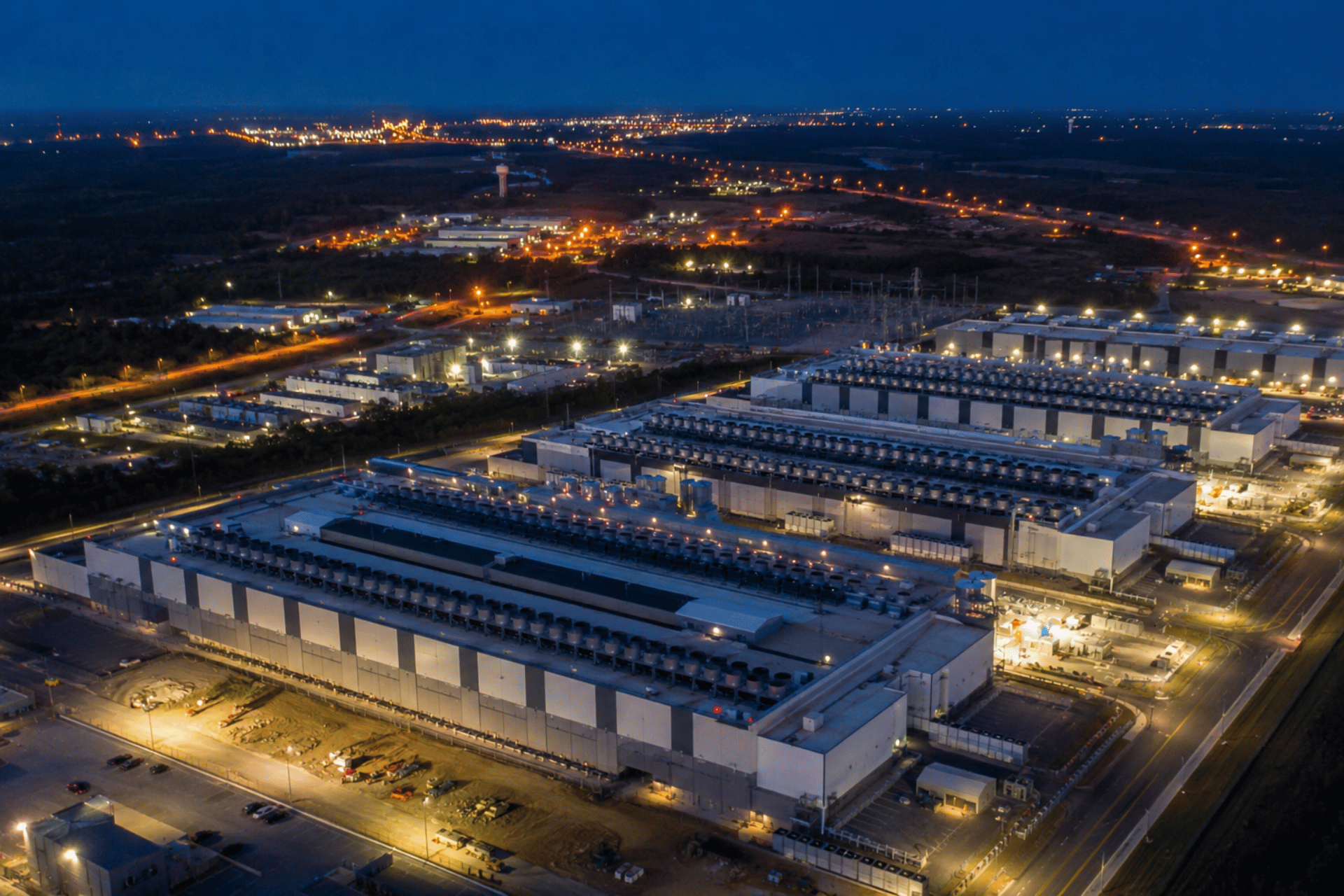
As America’s demand for artificial intelligence and cloud computing accelerates, massive data centers are popping up across the country at a record pace. Most people think of them simply as giant warehouses filled with computers. Yet a recent investigation from Oregon has raised new questions about whether these facilities could have unintended environmental and health impacts for nearby residents.
While researchers continue to investigate these concerns, the story serves as an important reminder that our modern world is changing in ways we don’t always see—or fully understand.
Readers of my book Zapped may remember that I explored how our increasingly technological environment can influence health in ways that often go unnoticed. This latest story isn’t about electromagnetic fields alone. It’s another reminder that as technology evolves, we must also pay attention to the broader environmental footprint it leaves behind—from air quality and water use to the cumulative exposures that affect the places we call home.
What Is a Data Center—and Why Are They Suddenly Everywhere?
Unless you’ve been living off the grid, you’ve probably used a data center today without even realizing it.
Every Google search, online purchase, streamed movie, AI chatbot, banking transaction, or cloud-stored photo passes through one of these enormous facilities. Inside are thousands (sometimes hundreds of thousands) of powerful computer servers running around the clock.
As artificial intelligence continues to explode in popularity, so has the demand for data centers. Companies like Amazon, Google, Microsoft, and Meta are investing billions of dollars to build new facilities across the country to keep up with the world’s growing appetite for digital information.
From the outside, a data center may look like an ordinary warehouse. Inside, however, thousands of computer servers run continuously—24 hours a day, 365 days a year.
Keeping that equipment online requires far more than electricity.
Large data centers rely on massive cooling systems to prevent servers from overheating. Many also maintain banks of diesel backup generators that are periodically tested and ready to operate during power outages. Depending on the location, communities have also raised concerns about increased energy demand, water consumption, construction-related dust, traffic, and noise.
What Environmental Concerns Are Being Studied?
From the outside, a data center may look like an ordinary warehouse. Inside, however, thousands of computer servers run continuously—24 hours a day, 365 days a year.
Keeping that equipment online requires far more than electricity.
Large data centers rely on massive cooling systems to prevent servers from overheating. Many also maintain banks of diesel backup generators that are periodically tested and ready to operate during power outages. Depending on the location, communities have also raised concerns about increased energy demand, water consumption, construction-related dust, traffic, and noise.
None of these factors automatically translate into health problems. But together, they illustrate why scientists and public health experts are paying closer attention as these facilities become more common.
Like many environmental questions, the issue isn’t likely to come down to one single exposure. It’s the cumulative picture that matters.
For years, most discussions surrounding data centers have focused on energy use and climate impact. But a growing number of communities are beginning to ask a different question:
Could living near these facilities also affect human health?
Why One Oregon Community Made Headlines
The conversation took an unexpected turn recently in eastern Oregon, where residents living near several Amazon data centers began voicing concerns about what they described as unusually high rates of cancer, miscarriages, and other health problems. The reports prompted news investigations and renewed discussion about the environmental footprint of these facilities.
At this point, it’s important to emphasize that no direct causal link has been established between the data centers and the illnesses reported by residents, and Amazon has stated that its operations comply with environmental regulations. Even so, the story has sparked broader questions that extend well beyond one community.
Why Scientists Are Taking a Closer Look at Low-Level Air Pollution
One of the biggest misconceptions about pollution is that it has to be dramatic to be harmful. Thick smog. Factory smoke. A chemical spill.
Increasingly, researchers are turning their attention to chronic, low-level exposure, the kind people may encounter every day without giving it a second thought. Instead of asking whether one exposure causes immediate harm, scientists are exploring what happens when small amounts of airborne pollutants become part of everyday life over months, years, or even decades.
That’s one reason communities located near highways, airports, industrial facilities (and now, increasingly, large data centers) are attracting greater scientific interest. Researchers want to better understand how long-term environmental exposures may influence inflammation, metabolism, cardiovascular health, and overall well-being.
It’s Not Just Your Lungs
When most people think about air pollution, they picture coughing or asthma.
But newer research suggests the effects may extend well beyond the respiratory system.
Scientists are finding that long-term exposure to airborne pollutants may influence the body’s metabolism, including how we regulate blood sugar, store fat, and respond to insulin. Some researchers believe chronic exposure may also contribute to ongoing low-grade inflammation—a common thread in many chronic health conditions.
While scientists are still working to understand exactly how these processes occur, the findings reinforce an important principle I’ve written about for decades:
Your environment doesn’t simply surround your body—it interacts with it.
Whether we’re talking about the food we eat, the water we drink, the products we use, or the air we breathe, every exposure becomes part of the total load your body must process.
We asked Dr. Roy Speiser, our Level 5 water and air quality expert, about this:
Question: From an indoor and environmental air quality perspective, what should readers understand about data centers that isn’t being discussed in the news? Are there realistic steps communities or homeowners can take to protect themselves, and are there misconceptions you’d like to clear up?
Dr. Speiser: My greatest concern is the release of PFAS chemicals and heavy metals. There has not been enough testing and monitoring of water discharge for PFAS. When they do test the discharged water, it is mostly for chlorine and regulated chemical substances. Even if they meet the allowable concentration standards, it is another contributor to increased levels of toxins into our environment, further contributing to long-term diseases.
Why This Matters to All of Us
The reality is that we rarely experience just one environmental exposure at a time.
Every day we’re exposed to a complex mix of factors, including the food we eat, the water we drink, the air we breathe, household chemicals, pesticides, plastics, and now, the growing infrastructure that powers our increasingly digital world.
Any one of these exposures may not amount to much on its own. But taken together, they contribute to what many practitioners call your total body burden—the cumulative load your body must process every single day.
What Can You Do Right Now?
Dr. Speiser suggests: Reduce your toxic load by using filtration equipment to clean your home water and indoor air. Toss out all toxic cleaning products and materials from your home, eat organic when possible, and don’t forget to eat your greens.
And I would add:
- If you don’t consistently eat enough greens, Daily Greens Formula is a simple way to increase your intake of chlorophyll-rich, purifying plant foods. This formula is packed with eleven organic, non-GMO superfoods including barley grass, chlorella, kale, celery, spinach, and more.
- Support your body’s natural antioxidant defenses with a colorful, plant-rich diet. I also like adding Vitality C as an easy way to boost antioxidant support. Just one scoop delivers a whopping 4,000 mg of Vitamin C to support immune resilience, antioxidant protection, and daily defense against environmental stressors.
- Since the liver serves as one of the body’s primary detoxification organs, maintaining healthy liver function is another important step. That’s one reason Liver-Lovin’ Formula has remained one of my foundational recommendations.
The Bottom Line
We live in an extraordinary age of innovation. Artificial intelligence, cloud computing, and the technologies that power them are transforming nearly every aspect of our lives. But progress and public health should always move forward together.
When I wrote Zapped, my hope was to encourage people to think differently about the hidden environmental influences we often overlook. Today’s conversation about data centers is another reminder that our world is constantly changing—and our understanding of health must evolve with it. I’ll be watching this research closely, and I’ll continue sharing what I learn with you.











2 Responses
Check out the massive emf emmisions from the sea of fiber opticc cables entering and exiting these facilities. And also emitting from the supply of and the massive macines using all this electricity. Emfsol.com (emfsolutios) is a good place to start.
Thanks Michael! Good to know – Team ALG